
Do High-Earning Executives Need a High Net Worth Financial Advisor?

Image Source: Pexels
Yes. High-earning executives with concentrated stock, deferred compensation, and complex tax triggers need more than generalist advice. A high net worth financial advisor for executives coordinates tax planning, investment management, and estate planning to protect compensation and build lasting wealth.
Reaching the C-suite changes more than your title. The shape of your entire financial picture, from how you're paid to the level of complexity behind every decision you make, also shifts.
Stock options, deferred compensation, executive bonuses, and equity grants don’t behave like a standard salary. They come with vesting schedules, tax triggers, and timing decisions that can either protect your wealth or quietly erode it.
For executives asking whether they need a financial advisor, rather than a generalist or a bank, the honest truth from us at Longevity Wealth is that the right financial advisor matters exactly because of that complexity.
Executive Compensation Is a Different Financial Challenge
Executive compensation draws from multiple sources: concentrated stock, deferred pay, and performance milestones, structured across multiple vesting periods. When you exercise options, sell shares, or defer compensation, each decision carries direct tax consequences.
Tax-efficient strategies, including tax-loss harvesting (selling investments that have fallen in value), can help sequence these decisions to reduce unnecessary exposure rather than reacting after the fact.
These complexities sit beyond the scope of a traditional advisor trained in retirement planning, mortgages, and basic investment management, but fit precisely what a high net worth financial advisor is trained to manage.
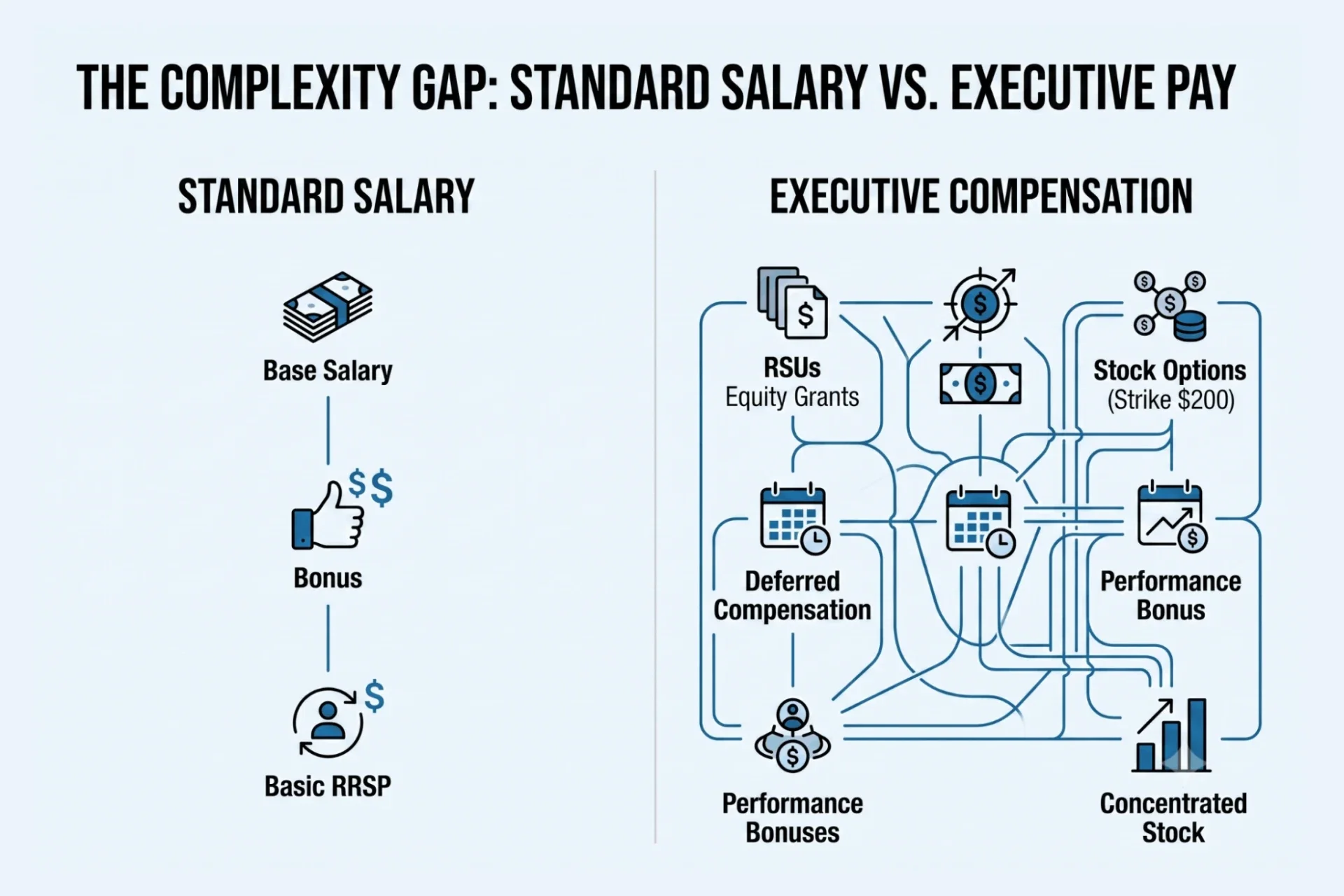
Image Source: Gemini 2026
Why a Generalist or a Big Bank Often Falls Short
A generalist or big bank can’t keep pace with the complexity of executive compensation. Many executives start there anyway. It’s familiar and accessible. But as compensation and complexity grow, that relationship stalls.
You’re handed off to a new advisor every year or two, and each one starts from scratch, without context on your compensation structure or your family's goals. The cost is real: a missed vesting deadline or a tax call made without the full picture can mean unnecessary tax paid, or exposed stock left unprotected.
The Cost of Siloed Advice
Without coordinated wealth management, you become the go-between for your accountant, your insurance broker, and your bank's financial planner. None of these professionals talk to each other, so the burden of connecting the dots falls on you.
A coordinated advisory model changes this. When a team of wealth advisors handles tax planning, investment management, insurance, and estate planning under one roof, decisions take your full picture into account, not in isolation.
What a Financial Advisor for Executives Does
A financial advisor for executives coordinates tax planning, investment management, and estate strategy around your specific compensation structure, not just your portfolio. We understand executive benefits and plan around the realities of Canada’s tax brackets for high-income earners, building a strategy that covers it all.
Protecting What You've Built for the Next Generation
Comprehensive wealth management focuses on structuring your finances so concentrated stock positions and estate complexity don’t expose your family to unnecessary risk.
Advanced estate planning, including trusts, charitable giving, and succession planning, helps ensure your legacy is protected and your wealth transfers efficiently to the next generation.
A Long-Term, Whole-Person Relationship
Your dedicated advisor should sit next to you, not across from you. That means understanding your business history, your family's needs, and your risk tolerance well enough to build a personalized plan, one that anticipates challenges rather than just responding to them.
Who This Is For
Specialized financial advice is for C-suite executives who recognize themselves in any of the following:
You’re a recently promoted C-suite executive managing a compensation package that includes equity or deferred income.
You’re frustrated by acting as the middleman between your accountant, broker, and bank.
You feel like a small fish in a big pond at your current institution.
You want a strategic partner who understands both your corporate rank and your personal wealth strategy, not just your account balance.

Image Source: Canva
FAQs About High Net Worth Financial Advisors
-
An executive financial advisor coordinates tax planning, investment management, and estate planning around complex compensation, including stock options, deferred pay, and equity grants, rather than offering generic investment advice alone.
-
Yes. Many wealth advisors, including Longevity Wealth, serve clients with a net worth of $500,000 or more, offering personalized plans tailored to incorporated professionals and executives at this stage.
-
A high net worth individual typically holds at least one million dollars in liquid assets, while ultra high net worth individuals hold $10 million or more. Executives often approach this threshold as compensation vests.
-
Most do. High net worth individuals typically require comprehensive wealth management, including tax-efficient strategies, estate planning, and succession planning, that go beyond standard investment advice from a generalist.
Key Takeaways
Executive compensation (stock, deferred pay, equity) requires specialized tax planning, not generalist advice.
A high net worth financial advisor coordinates tax planning, investment management, and estate planning under one roof.
Big banks and generalists often leave executives to handle siloed advice from multiple professionals.
Corporate rank and income complexity, not just liquid net worth, define when executives need specialist support.
A dedicated financial advisor for executives protects compensation and builds a long-term, personalized wealth strategy.
Take the Next Step Toward Strategic Financial Planning and Investment Advice
Executive compensation isn’t something a generalist can plan around after the fact. It requires a high net worth financial advisor who understands the coordination between tax, investment management, insurance, and estate planning from the outset.
Longevity Wealth delivers full-service, integrated financial planning through a team of wealth advisors for C-suite executives who need more than a transactional relationship. If you're ready to move beyond siloed advice and institutional neglect, book a no-obligation discovery call and see what coordinated wealth management can do for your future.
