What Critical Illness Insurance Costs, and If It’s Worth It

Image Source: Pexels
Critical illness insurance costs generally range from $25 to $100 per month, though actual costs depend heavily on age, health, and coverage amount. It’s worth it when a lump-sum payout protects your income, mortgage payments, and wealth strategy against the financial disruption of a serious diagnosis.
If you already know the basics of how critical illness insurance works, the next question is purely practical: what will critical illness coverage cost, and is that premium worth it as part of your overall wealth plan?
At Longevity Wealth, we help clients weigh that exact tradeoff every day, since knowing the price helps you compare protection and expense objectively against the rest of your financial picture.
Here's a clear breakdown of pricing and value, without the guesswork.
What Drives Critical Illness Insurance Premiums
Most critical illness policies price out between $25 to $100 a month, though your actual cost depends on your age, health, lifestyle, coverage amount, and policy features.
The premium you pay for a critical illness benefit is not one-size-fits-all. Premiums for illness insurance in Canada vary widely.
Age, Gender, and Smoking Status
Age is usually the main factor behind critical illness insurance pricing, and premiums often rise steadily as you get older.
Your gender and whether you smoke also play a major role. Smokers typically face much higher costs than non-smokers, and pricing may vary for men and women based on the illnesses covered. Pre-existing medical issues, such as heart disease, can further influence how an insurer sets your rate.
Coverage Amount and Policy Type
Critical illness insurance coverage in Canada typically spans $25,000 to $2 million. As coverage rises, premiums usually increase as well. Term critical illness policies are often cheaper initially, but the cost may rise when the term renews. Permanent critical illness insurance typically features a more stable premium that stays consistent throughout the policy’s lifetime.
The benefit amount is only one piece of the puzzle. It also matters how many medical conditions the policy includes. Entry-level critical illness plans often cover about 20-25 major illnesses, including cancer, heart attack, heart surgery, and stroke. More extensive critical illness coverage can extend to 44 or more conditions.
Since broader critical illness coverage usually increases your premium, it’s smart to compare the illnesses you truly want covered with the cost of that added coverage.
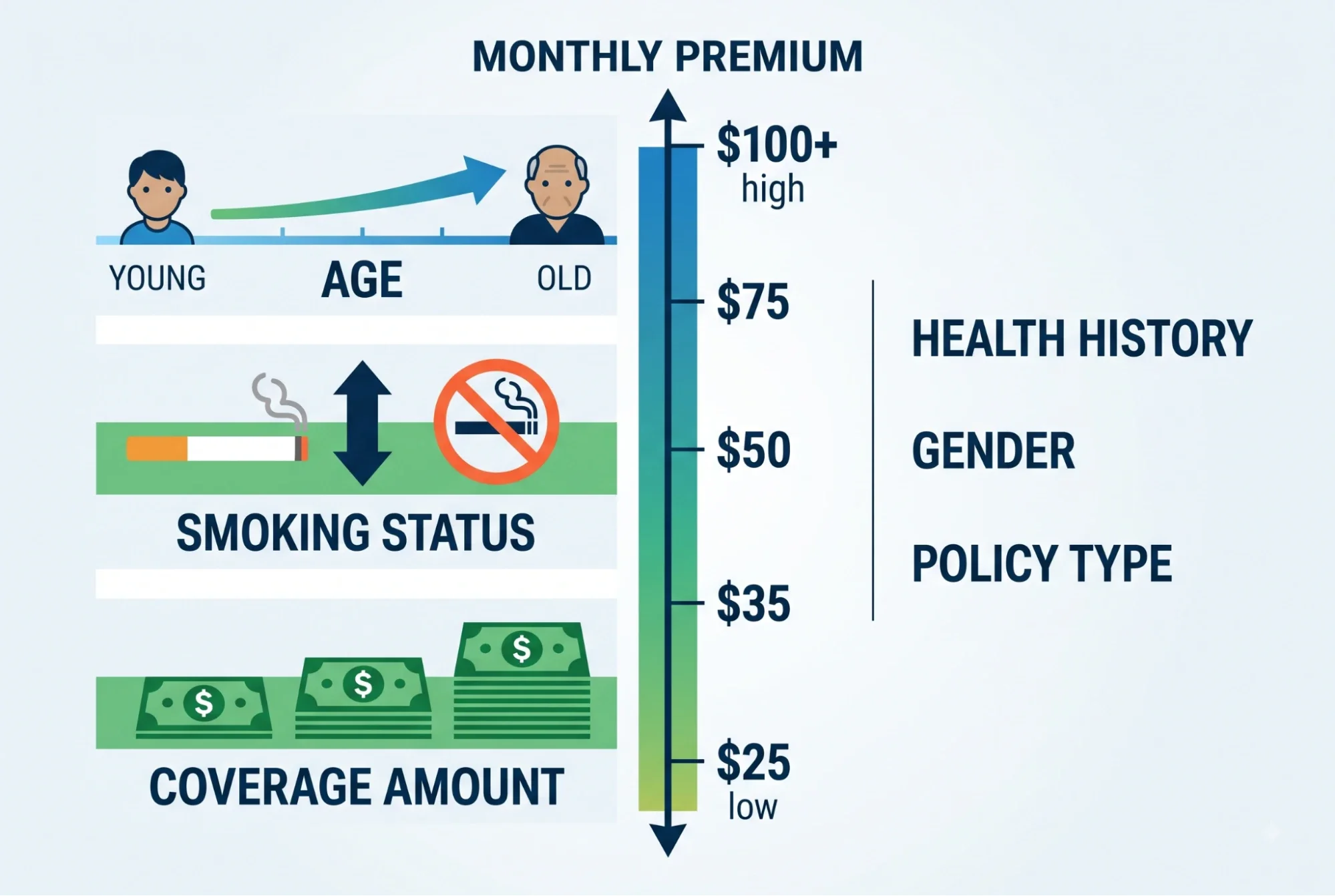
Image Source: Gemini 2026
Medical History and Optional Features
Your medical history and family history of serious illness factor into underwriting and can affect your premium. Insurers may also review your medical history against the waiting periods for specific conditions before finalizing a quote.
Optional features, such as return-of-premium benefits, can also significantly increase the cost of a critical illness insurance plan, so it's worth asking your provider exactly what's included in a quote.
Reviewing these details up front helps you avoid surprises when comparing critical illness insurance plans across providers. If you're weighing coverage as part of a bigger financial picture, our guide on choosing a financial advisor in Toronto walks through what to look for in a planner who can coordinate insurance decisions like this one with the rest of your strategy.
Is Critical Illness Insurance Worth It?
For most people building long-term financial security, yes: the premium is usually worth it, because the cost of a serious illness without coverage almost always outweighs it.
Based on estimates from the Canadian Cancer Society, close to two out of five Canadians will face cancer at some point in their lives, and heart-related issues make up a large portion of annual hospital stays.
A critical illness diagnosis, such as a heart attack, prostate cancer, multiple sclerosis, or another insured condition, does not typically put your bills on hold. Your mortgage, regular living costs, and additional health expenses still come in, often just as your income is reduced or temporarily stops.
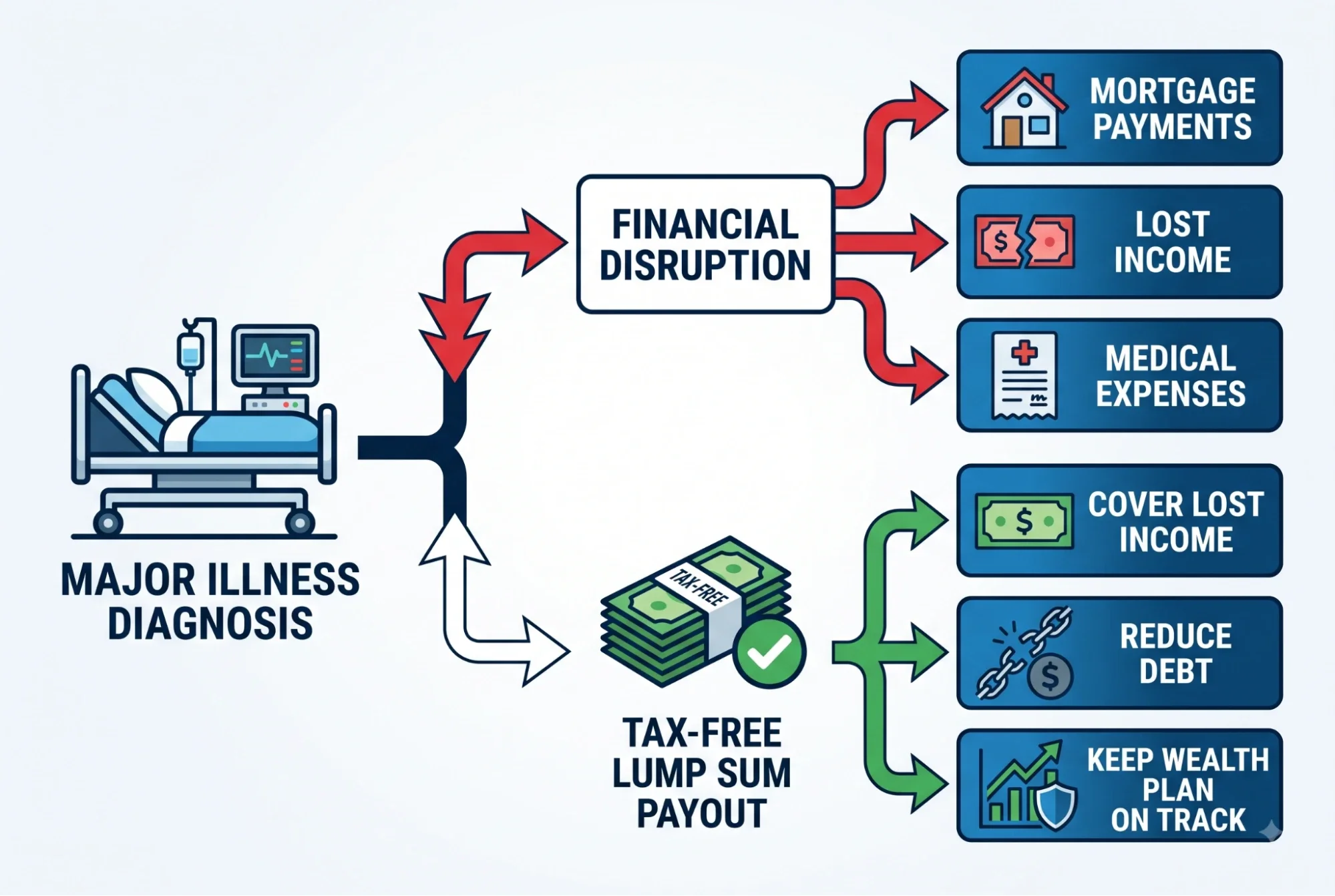
Image Source: Gemini 2026
This is where a critical illness insurance policy earns its place. A major illness rarely announces itself on a convenient timeline, and most plans deliver a lump-sum benefit upon a definitive diagnosis, which is generally tax-free in Canada.
Unlike disability insurance, which pays a monthly income while you’re unable to work, critical illness insurance delivers one payout you can direct anywhere: lost income replacement, medical expenses, debt reduction, or simply protecting the wealth strategy you’ve already built.
For clients committed to long-term plans, critical illness insurance isn’t a wager on getting sick. It’s a way to put a financial backstop in place today, so a future medical issue does not derail or force you to undo years of steady planning.
How Critical Illness Insurance Compares
| Insurance Type | How It Pays Out | Best For |
|---|---|---|
| Critical illness insurance | Lump sum payment upon a covered diagnosis | Covering immediate costs and protecting savings during recovery |
| Disability insurance | Monthly income while unable to work | Replacing ongoing income during a longer-term inability to work |
| Life insurance | Benefit paid to beneficiaries after death | Protecting dependents and long-term financial obligations after you're gone |
| Whole life insurance | Benefit paid to beneficiaries after death, plus a cash value that builds over time | Permanent coverage paired with a tax-advantaged savings component within a wealth strategy |
Each type of coverage serves a different purpose, and many financial plans include more than one. Disability coverage and critical illness insurance are often paired together, since one replaces income and the other delivers a lump sum you can direct anywhere.
Getting a Critical Illness Insurance Quote That Fits Your Plan
A generic quote won't tell you much. The most useful critical illness insurance quote considers your age, health history, any pre-existing conditions, your existing insurance coverage, and how it fits into your overall financial picture.
Most critical illness insurance providers will ask you to complete a health questionnaire before issuing a quote, and waiting periods for claims can vary by covered condition, so it's worth comparing several quotes before deciding.
Online comparison tools can also help you estimate and compare critical illness insurance quotes across providers before committing to a policy, giving you a clearer sense of where your quote stands relative to the market. This is exactly the kind of coordination Longevity Wealth builds into our approach to wealth management: insurance decisions reviewed alongside your taxes, estate plan, and investments, not in isolation.
If you haven't yet reviewed how critical illness insurance works and what it covers, our explainer is a good next step before comparing quotes.
FAQs About Critical Illness Insurance
-
If a serious illness disrupts your income, savings, or long-term plan, critical illness insurance can provide a lump sum to keep that plan on track.
-
Critical illness premiums in Canada tend to sit in the $25–$100 monthly range, depending on your age, health, coverage amount, and policy type, with higher premiums better suited to offsetting significant medical expenses.
-
For many Canadians, yes. It provides a tax-free lump sum upon diagnosis, helping cover lost income, mortgage payments, and medical expenses during recovery.
-
They serve different purposes. Disability insurance replaces monthly income, while critical illness insurance pays a lump sum for a covered critical illness diagnosis, giving you financial support exactly when you need it. Many financial plans include both disability coverage and critical illness protection.
Key Takeaways
Critical illness insurance costs typically range from $25 to $100 monthly in Canada, with pricing set before any critical illness diagnosis occurs, driven by age, gender, smoking status, and coverage amount.
Most coverage amounts land between $25,000 to $2 million and are paid as a tax-free lump sum upon a covered diagnosis.
Nearly two in five Canadians will face a cancer diagnosis, making critical illness insurance coverage a practical safeguard for income and mortgage payments.
The right critical illness insurance quote should reflect your health history and how coverage fits your broader wealth strategy, not a generic estimate.
Build Illness Protection Into Your Wealth Strategy
The cost of critical illness insurance is only half the equation. The real question is whether that coverage protects the financial plan you're actively building. A conversation with the Longevity Wealth team can help you see exactly where critical illness coverage fits into your broader wealth strategy, with a quote tailored to your specific situation.
Book a consultation with Longevity Wealth to get a personalized quote and see how critical illness insurance protects the plan you’re already building.